
Syllabus topic: Topic II of the CSS Pakistan Affairs syllabus.
Short answer
Pakistan’s natural wealth is real, but wealth in the ground is not prosperity. Water is wasted, land is under-productive, minerals have been left undeveloped and energy resources are under-used. Efficient use, through good governance, investment, technology and value addition, can turn these resources into exports, jobs and self-reliance.
Outline for quick revision
- Introduction
- Pakistan’s Natural Resource Base: Land and agriculture; Water; Minerals; Energy resources; Coast and sea; Forests and tourism
- Present Situation: Why Resources Have Not Brought Prosperity: Under-used and wasted water; Low agricultural productivity; Minerals left undeveloped; Energy mismanagement; Governance and policy failures; Climate change and disasters
- How Efficient Use Can Make Pakistan Prosperous: Water efficiency and storage; Modern agriculture; Mining with value addition; Indigenous energy; Blue economy and tourism; Policy stability and investment
- Conclusion
Reference colours:
Quotation / documentPersonality / historySyllabus bookCurrent referenceOfficial report / policy
1. Introduction
Pakistan is rich in natural resources: fertile plains, one of the world’s largest irrigation systems, vast coal reserves, copper and gold, salt, gemstones and a long coastline. Yet it remains a lower-middle-income country dependent on loans and imports.
The statement is correct: the problem is not a shortage of resources but their inefficient use, poor governance, lack of investment, waste and mismanagement. Efficient use could turn Pakistan’s resource wealth into prosperity.
2. Pakistan’s Natural Resource Base
Land and agriculture
The fertile Indus plains make Pakistan a major producer of wheat, rice, cotton, sugarcane, fruits and milk; it is among the world’s largest producers of milk and a leading rice exporter. Agriculture still employs about a third of the workforce, so the land is the most important resource for jobs and food security.
Water
The Indus Basin Irrigation System is one of the largest contiguous irrigation networks in the world; the northern glaciers feed the rivers. But per-capita water availability has fallen below 1,000 cubic metres, the threshold of water scarcity.
Minerals
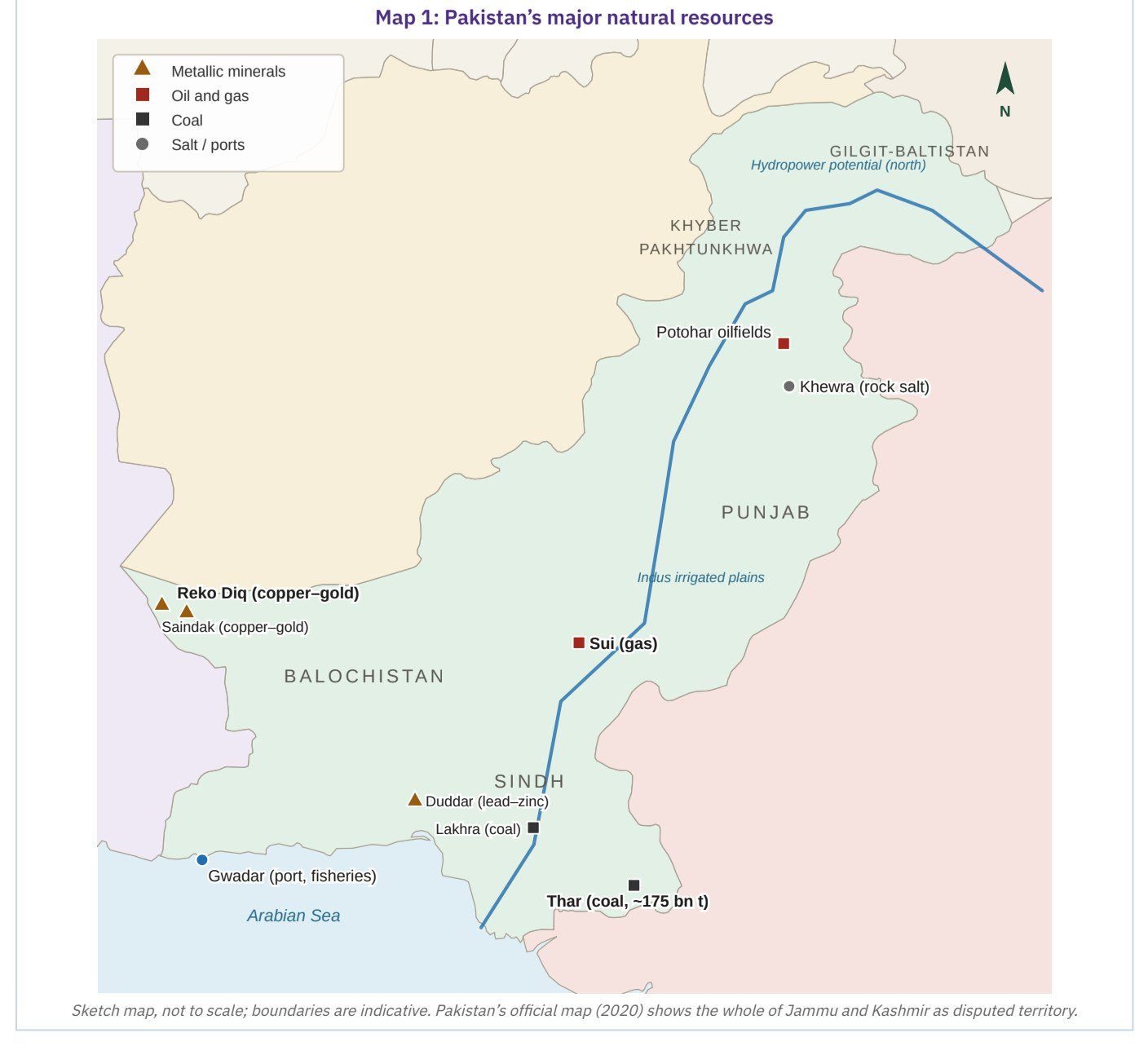
Thar holds about 175 billion tonnes of lignite coal; Chagai has the copper-gold deposits of Reko Diq and Saindak; the Salt Range (Khewra) has one of the world’s largest salt mines; there are large reserves of gypsum, limestone, marble, chromite and gemstones.
Energy resources
Pakistan has natural gas (Sui and other fields), some oil, and hydropower potential of tens of thousands of megawatts in the northern rivers, of which only a fraction is used. Sindh and Balochistan have some of the best solar and wind conditions in the region, especially along the Jhimpir-Gharo wind corridor.
Coast and sea
A coastline of about 1,050 km gives Pakistan fisheries, mangrove forests and the deep-sea ports of Karachi, Port Qasim and Gwadar. Its exclusive economic zone at sea is large, yet the “blue economy” contributes very little to national income.
Forests and tourism
The northern mountains, including K2 and four other peaks above 8,000 metres, lakes, valleys and forests give large tourism potential. Forest cover, however, is only about 5% of the land, far below what a healthy environment needs.
- Resources: land, water, minerals, energy, coast
- Efficient use: governance, investment, technology, value addition
- Prosperity: exports, jobs, self-reliance
3. Present Situation: Why Resources Have Not Brought Prosperity
Under-used and wasted water
Flood irrigation, unlined canals and watercourses, and silting of dams waste a large share of water before it reaches the crops. Pakistan can store only about 30 days of river flow, compared with hundreds of days in many countries, so floodwater runs to the sea while farmers face shortages.
Low agricultural productivity
Yields of wheat, rice and cotton per acre are well below those of regional competitors because of poor seeds, little mechanisation and weak extension services. As a result Pakistan, once a food exporter, now spends billions of dollars a year importing food and edible oil.
Minerals left undeveloped
Legal disputes, weak policy and insecurity delayed projects such as Reko Diq for decades. Most minerals are still exported raw, without processing or value addition, so the country earns little and local communities in Balochistan see few benefits, which feeds resentment.
Energy mismanagement
Despite coal, hydro and solar potential, Pakistan relied heavily on imported oil, LNG and coal for power. This drains foreign exchange, while circular debt and high tariffs burden industry and households.
Governance and policy failures
Corruption, weak institutions, unclear property rights and frequent policy reversals discourage both local and foreign investors. Resources need long-term investment, which comes only when rules are stable.
Climate change and disasters
Floods, droughts and heatwaves destroy crops, livestock, soil and infrastructure, and glacier melt threatens long-term water supply. Without adaptation, climate change will erode the very resource base on which prosperity depends.
4. How Efficient Use Can Make Pakistan Prosperous
Water efficiency and storage
Drip and sprinkler irrigation, lining of canals and watercourses, and realistic water pricing would save a large share of water. New storage, Diamer-Bhasha and Mohmand dams, and smaller dams and rainwater harvesting, would capture floodwater and reduce both floods and shortages.
Modern agriculture
Certified seeds, mechanisation, better extension services and access to credit can raise yields. Corporate and cooperative farming and value-added agro-industry, processing fruit, milk and cotton instead of selling them raw, would raise farm incomes and exports.
Mining with value addition
Transparent contracts, local processing and refining, and a fair share of revenue, jobs and royalties for local communities in Balochistan would make mining both profitable and politically sustainable. Reko Diq, once developed, can show how this model works.
Indigenous energy
Using Thar coal, hydropower, solar and wind instead of imported fuel would cut the import bill, stabilise the rupee and lower power costs. This needs integrated planning across ministries and provinces rather than piecemeal projects.
Blue economy and tourism
Modernising fisheries and processing, developing Gwadar and coastal tourism, and improving roads, hotels and safety in the north could create many jobs. Tourism and the sea are resources Pakistan has barely begun to use.
Policy stability and investment
Investors need a stable, transparent framework that survives changes of government. The Special Investment Facilitation Council (2023) and the Pakistan Minerals Investment Forum (Islamabad, April 2025) are steps in this direction.
5. Conclusion
Pakistan’s natural wealth is real, but wealth in the ground is not prosperity. Water is wasted, land is under-productive, minerals have been left undeveloped and energy resources are under-used. Efficient use, through good governance, investment, technology and value addition, can turn these resources into exports, jobs and self-reliance. The statement is correct: Pakistan’s prosperity depends less on what it has than on how well it uses it.
Related answers on this topic
- Cultural Heritage of Pakistan
- Agricultural Decline in Pakistan
- Hindrances to Industry in Pakistan
- HEC and Higher Education in Pakistan
More preparation: See all CSS Pakistan Affairs past papers by topic.
Last updated: 2 November 2026.
Preparing for CSS 2027? Subscribe to Prep With NAJO WAVE for more Pakistan Affairs answers.