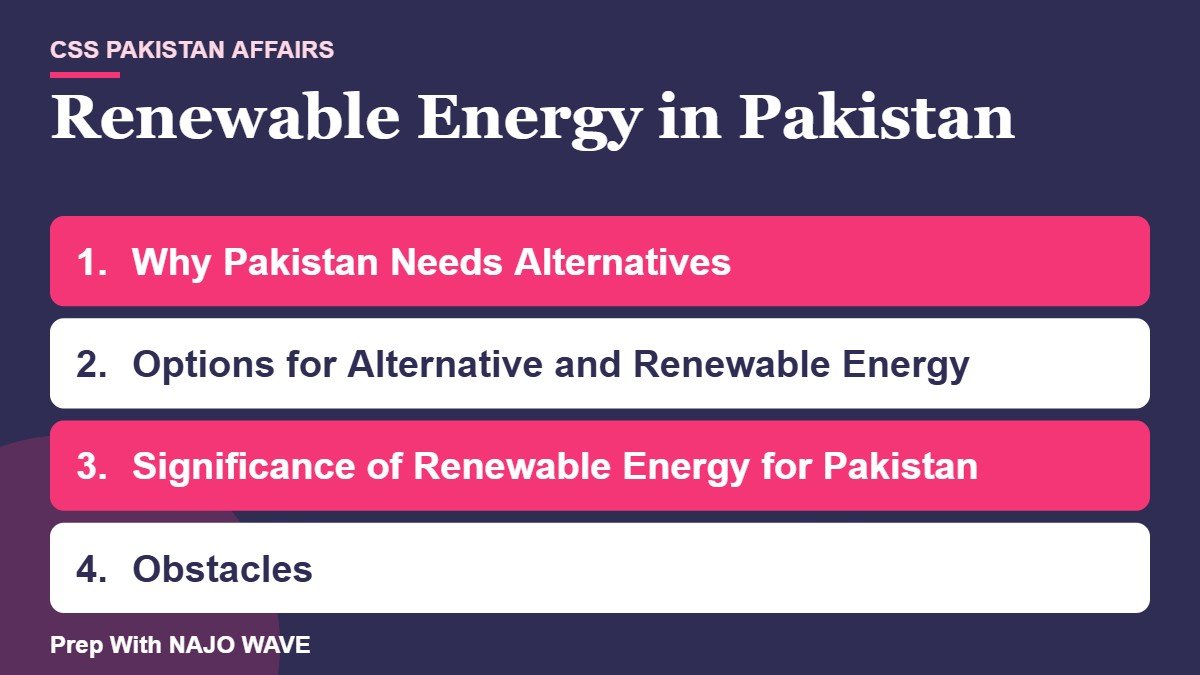

CSS 2017, Q7: Explore the option of alternative energy resources to overcome energy crisis in Pakistan. (One answer covers both: for 2021, expand Section 4 on significance; for 2017, expand Sections 3 and 6 on options and measures.)
Syllabus topic: Topic XX of the CSS Pakistan Affairs syllabus.
Short answer
Pakistan has abundant sun, wind, water and biomass, and the solar boom has shown how quickly citizens will adopt cheaper, cleaner energy. Renewable and alternative energy can give Pakistan energy security, save foreign exchange, lower tariffs, meet its climate pledges and bring power to remote areas.
Outline for quick revision
- Introduction
- Why Pakistan Needs Alternatives
- Options for Alternative and Renewable Energy: Solar energy; Wind energy; Hydropower; Biomass and waste-to-energy; Nuclear energy; Domestic coal and others
- Significance of Renewable Energy for Pakistan: Energy security; Saving foreign exchange; Cheaper electricity; Access for remote areas; Jobs and industry
- Obstacles: Grid and capacity payments; Policy inconsistency; Intermittency and storage; Finance and security
- Measures to Use Renewables to Overcome the Crisis
- Conclusion
Reference colours:
Quotation / documentPersonality / historySyllabus bookCurrent referenceOfficial report / policy
1. Introduction
Pakistan’s energy crisis, first of shortage, now of affordability, is closely tied to its dependence on imported oil, gas and coal, which drain foreign exchange and expose consumers to global price shocks. Alternative energy means sources other than conventional imported fossil fuels; renewable energy, solar, wind, hydro, biomass and geothermal, is the most important part of it.
Pakistan is rich in these resources but has used only a fraction of them. This answer explores the options, explains their significance and identifies the obstacles. Its argument is that renewable energy is Pakistan’s most realistic path to cheap, secure and clean energy, but only if the grid, policy and finance are made ready for it.
2. Why Pakistan Needs Alternatives
A large share of Pakistan’s electricity still comes from imported fuel, making tariffs hostage to global prices and the exchange rate, as the Middle East war of 2026 showed again. Circular debt and capacity payments have made grid power among the most expensive in the region, while climate change threatens both hydropower and the economy.
3. Options for Alternative and Renewable Energy
Solar energy
Pakistan receives strong sunshine for most of the year, especially in Balochistan, Sindh and southern Punjab. Large solar parks such as the Quaid-e-Azam Solar Park in Bahawalpur and, above all, rooftop solar in homes, businesses and tube-wells have expanded rapidly.
Wind energy
The Gharo-Keti Bandar wind corridor in Sindh has a large estimated potential; dozens of wind farms in Jhimpir already feed the grid. Wind blows strongly in the summer months when demand is highest.
Hydropower
Pakistan’s hydropower potential is estimated at about 60,000 MW, of which only a fraction has been developed. Large and small hydro projects provide cheap, clean electricity and also store water.
Biomass and waste-to-energy
Sugar mills generate power from bagasse, and agricultural waste, animal dung (biogas) and municipal waste can generate electricity and cooking gas, especially in rural areas.
Nuclear energy
Though not renewable, nuclear power is a low-carbon alternative; plants at Chashma and Karachi (K-2 and K-3, 1,100 MW each) provide reliable base-load power.
Domestic coal and others
Thar coal reduces import dependence but is not clean; geothermal and green hydrogen are emerging options for the future.
4. Significance of Renewable Energy for Pakistan
Energy security
Domestic sunlight, wind and water cannot be blocked by global crises; they reduce Pakistan’s exposure to oil and LNG price shocks and supply disruptions such as the closure of the Strait of Hormuz in 2026.
Saving foreign exchange
Every unit of electricity from solar, wind or hydro replaces imported fuel, easing the balance of payments and reducing pressure on the rupee.
Cheaper electricity
New solar and wind projects now produce electricity at a lower cost than imported-fuel plants, and have no fuel costs, so they can help bring tariffs down over time.
- Renewable: solar, wind, hydro, biomass
- Low-carbon: nuclear
- Domestic fossil: Thar coal, local gas
Renewables are central to Pakistan’s pledge under the Paris Agreement, and they make Pakistan eligible for climate finance.
Access for remote areas
Off-grid solar and micro-hydro can bring electricity to villages in Balochistan, Gilgit-Baltistan and the former FATA that the national grid does not reach.
Jobs and industry
Installing, maintaining and eventually manufacturing solar and wind equipment can create jobs for young people.
5. Obstacles
Grid and capacity payments
The grid was built for large central plants; rapid rooftop solar has reduced grid demand, raising costs for remaining consumers because capacity payments must still be paid.
Policy inconsistency
Frequent changes in tariffs, incentives and net-metering rules have discouraged investors; the 2019 policy targets have not been met.
Intermittency and storage
Solar and wind vary with weather and time of day, requiring batteries, hydro storage and a flexible grid.
Finance and security
High interest rates, currency risk and insecurity in some areas raise the cost of projects.
6. Measures to Use Renewables to Overcome the Crisis
Pakistan should follow a single integrated energy plan in which all new capacity is chosen by least cost, which now favours renewables; invest in transmission, battery storage and a smart grid; set stable, long-term rules for rooftop and utility solar; use competitive auctions for new wind and solar projects; complete hydropower projects; develop local manufacturing of solar and battery components; and use climate finance and green bonds to fund the transition.
7. Conclusion
Pakistan has abundant sun, wind, water and biomass, and the solar boom has shown how quickly citizens will adopt cheaper, cleaner energy. Renewable and alternative energy can give Pakistan energy security, save foreign exchange, lower tariffs, meet its climate pledges and bring power to remote areas. The obstacles, an old grid, costly capacity payments, inconsistent policy and limited finance, are problems of governance, not resources. With integrated planning, a modern grid and stable policy, renewables can turn Pakistan’s energy crisis into an energy opportunity.
Related answers on this topic
More preparation: See all CSS Pakistan Affairs past papers by topic.
Last updated: 2 November 2026.
Preparing for CSS 2027? Subscribe to Prep With NAJO WAVE for more Pakistan Affairs answers.