
Syllabus topic: Topic XXIV of the CSS Pakistan Affairs syllabus.
Short answer
Instability in Afghanistan continues to shape Pakistan’s internal security through TTP sanctuaries and record violence, its regional diplomacy through a hostile Kabul, India’s return and blocked connectivity, and its counter-terrorism strategy, which has moved from talks to cross-border force.
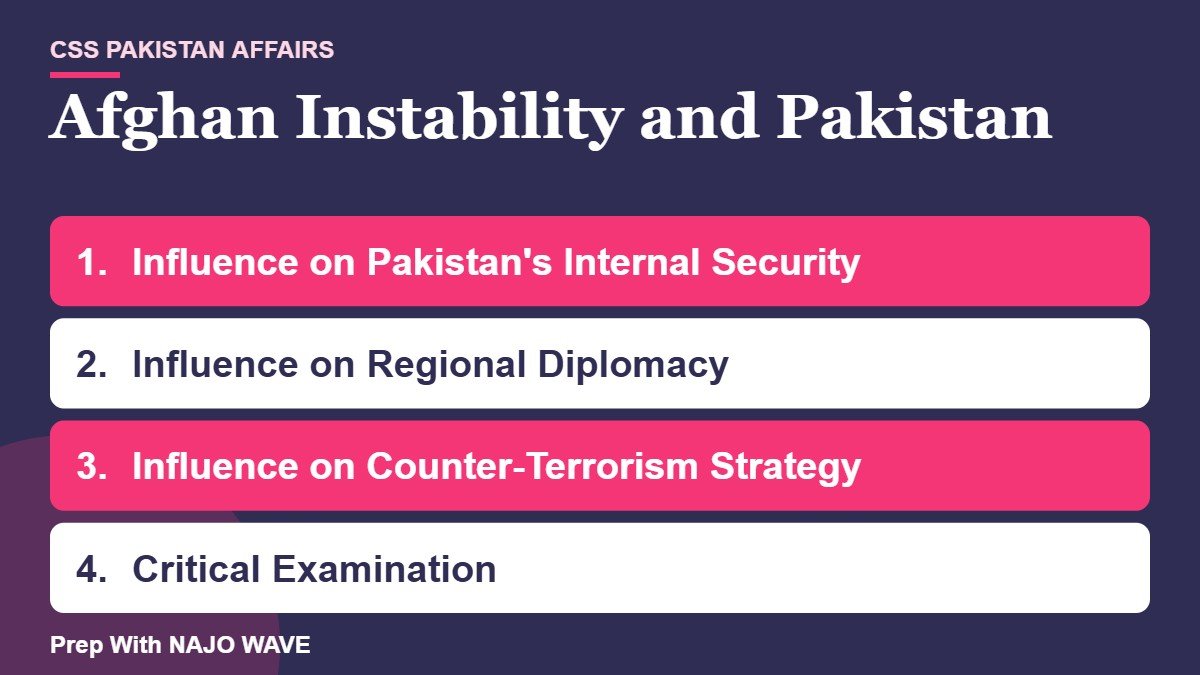
Outline for quick revision
- Introduction
- Influence on Pakistan’s Internal Security: Sanctuaries for the TTP; Record levels of violence; Baloch insurgency and ISIS-K; Pressure on governance in KP
- Influence on Regional Diplomacy: From “strategic depth” to hostility; India’s return to Kabul; Connectivity blocked; Refugees and humanitarian diplomacy; Great-power and regional engagement
- Influence on Counter-Terrorism Strategy: From dialogue to force; Naming and framing; Limits of a military approach
- Critical Examination: Why the statement is largely valid; Why it is not the whole picture; A two-way relationship
- Policy Measures: A coherent Afghanistan policy; Strengthen internal counter-terrorism; Develop the border regions; Smart border management; Humane refugee policy; Regional connectivity as an incentive
- Conclusion
Reference colours:
Quotation / documentPersonality / historySyllabus bookCurrent referenceOfficial report / policy
1. Introduction
When the Taliban returned to power in Kabul in August 2021, many in Pakistan expected a friendly western neighbour and an end to India’s influence in Afghanistan. Instead, the Taliban’s return emboldened the Tehreek-e-Taliban Pakistan (TTP), terrorism in Pakistan rose to its highest level in a decade, and by 2025-26 the two countries were engaged in border clashes and air strikes.
The statement identifies three areas of influence, internal security, regional diplomacy and counter-terrorism strategy. This answer examines each critically, then suggests policy measures. It argues that the statement is largely valid, Afghanistan’s instability is the most important external driver of Pakistan’s security problems, but that Pakistan’s own governance and policy choices determine how severe that influence becomes.
2. Influence on Pakistan’s Internal Security
Sanctuaries for the TTP
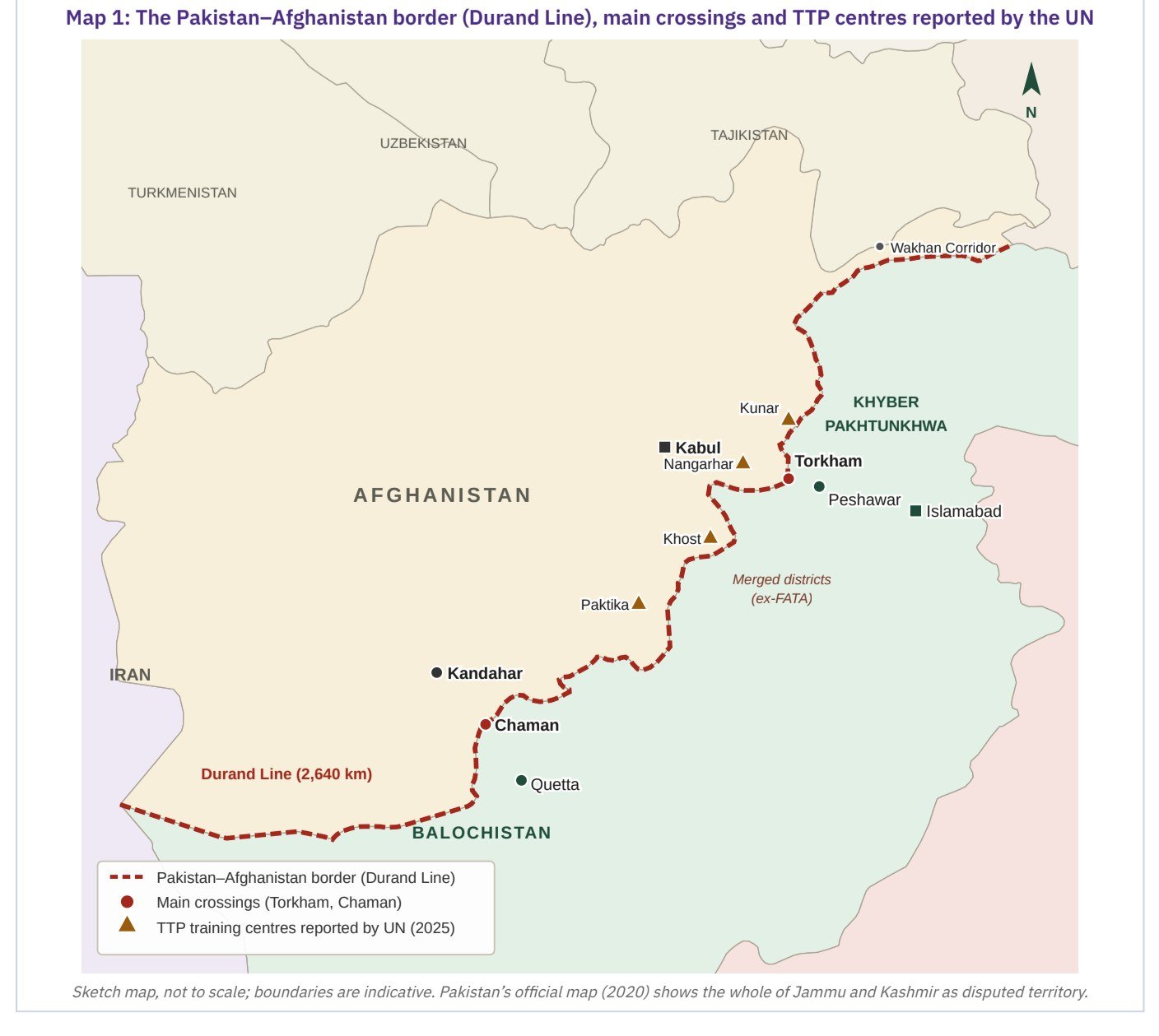
The TTP and its splinter groups operate from Afghan territory with the tolerance, and, according to the UN, the support, of the Taliban, launching attacks across the border into Khyber Pakhtunkhwa and Balochistan.
Record levels of violence
Terrorist deaths and attacks have reached their highest level in over a decade, making Pakistan the world’s most terrorism-affected country.
Baloch insurgency and ISIS-K
Pakistan alleges that Baloch separatist groups also find shelter in Afghanistan, while ISIS-K threatens both countries and attacked Shia worshippers in Pakistan.
Pressure on governance in KP
Rising violence in Khyber Pakhtunkhwa has strained the province’s governance and led to emergency measures, deepening federal-provincial and political tensions.
3. Influence on Regional Diplomacy
From “strategic depth” to hostility
The belief that a Taliban government would be Pakistan’s friend has collapsed; relations have moved from optimism in 2021 to open conflict in 2025-26, with mediation by Qatar, Turkey, Saudi Arabia and China producing only temporary ceasefires.
India’s return to Kabul
India has used Pakistan-Taliban tensions to rebuild its presence in Afghanistan.
Connectivity blocked
Instability has frozen plans to link Pakistan with Central Asia through Afghanistan, the trans-Afghan railway, TAPI and CASA-1000, and border closures have paralysed trade.
Refugees and humanitarian diplomacy
Pakistan’s large-scale repatriation of Afghans has drawn criticism from the UN and rights groups and fuelled hostility in Afghanistan.
Great-power and regional engagement
China, Russia, Iran and the Central Asian states share Pakistan’s concern about terrorism from Afghanistan, creating space for regional diplomacy through the SCO and trilateral formats.
4. Influence on Counter-Terrorism Strategy
From dialogue to force
After talks with the TTP mediated by the Taliban (2021-22) failed, Pakistan launched Operation Azm-e-Istehkam (2024) and moved to cross-border strikes against TTP hideouts, a major shift in strategy.
Naming and framing
The state now calls the TTP “Fitna al-Khawarij” and Baloch militants “Fitna al-Hindustan”, framing them as foreign-backed and religiously deviant.
Limits of a military approach
Cross-border strikes risk civilian casualties, international criticism and a wider war, while the TTP’s networks inside Pakistan require policing, intelligence and governance, not only military force.
5. Critical Examination
Why the statement is largely valid
The evidence, UN reports, record terrorist violence, border wars and blocked trade, shows that Afghanistan’s instability shapes Pakistan’s security, diplomacy and counter-terrorism more than any other external factor.
Why it is not the whole picture
Pakistan’s own past policy of backing the Taliban, weak governance and policing in the merged districts, political polarisation and economic weakness make it more vulnerable; even a stable Afghanistan would not by itself end terrorism in Pakistan.
A two-way relationship
Pakistan’s actions, border closures, refugee deportations and air strikes, also affect Afghanistan’s stability, so the relationship is one of mutual influence, not one-way spill-over.
6. Policy Measures
A coherent Afghanistan policy
Build a national consensus, civil and military, federal and provincial, on a single Afghanistan policy, made through Parliament rather than ad hoc decisions.
- Internal security: TTP sanctuaries, record violence, KP strain
- Regional diplomacy: hostile Kabul, India’s return, blocked connectivity
- CT strategy: from talks to strikes; limits of force
Use bilateral talks, regional mediators (China, Qatar, Turkey, Saudi Arabia) and the SCO to press the Taliban to act against the TTP, linking trade, transit and recognition-related issues to verifiable steps.
Strengthen internal counter-terrorism
Implement the National Action Plan fully, build capable police and CTDs in KP and Balochistan, cut terror financing and counter extremist narratives through the ulema’s consensus.
Develop the border regions
Invest in the merged districts and Balochistan, jobs, schools, courts and local government, so that militants lose recruits and support.
Smart border management
Complete the fencing and modernise crossings, but keep trade and people-to-people movement open through regulated routes, because economic interdependence is also a tool of stability.
Humane refugee policy
Manage returns gradually, in coordination with UNHCR, and offer legal status to long-settled Afghans with skills and families in Pakistan.
Regional connectivity as an incentive
Offer the Taliban the benefits of trade, transit and connectivity to Central Asia in return for cooperation against terrorism.
7. Conclusion
Instability in Afghanistan continues to shape Pakistan’s internal security through TTP sanctuaries and record violence, its regional diplomacy through a hostile Kabul, India’s return and blocked connectivity, and its counter-terrorism strategy, which has moved from talks to cross-border force. The statement is largely valid, but Pakistan’s vulnerabilities are also of its own making. A coherent national policy that combines firm diplomacy with the Taliban, strong internal counter-terrorism, development of the border regions, humane refugee management and the incentive of regional trade offers the best way to turn the Afghan challenge into a manageable one.
Related answers on this topic
More preparation: See all CSS Pakistan Affairs past papers by topic.
Last updated: 2 November 2026.
Preparing for CSS 2027? Subscribe to Prep With NAJO WAVE for more Pakistan Affairs answers.