
Syllabus topic: Topic XVII of the CSS Pakistan Affairs syllabus.
Short answer
Pakistan has delayed building dams mainly because of political disputes among provinces, short-term politics, financial constraints, a policy bias towards thermal power, weak planning and security problems, not because of a lack of sites or engineering skill. The cost has been water scarcity, expensive electricity and greater flood losses, at a time when climate change and India’s stance on the Indus Waters Treaty make storage more urgent than ever.
Outline for quick revision
- Introduction
- Why Dams Matter for Pakistan
- Causes of Delay: Political causes; Financial causes; Policy and governance causes; Technical, social and security causes
- The Cost of Delay, the “Collateral Loss”
- Current Progress
- Suggestions to Reverse the Loss: Build consensus through the CCI; A protected, long-term water plan; Innovative financing; Small and medium dams; Fair resettlement and local benefit; Demand-side reforms; Security and timely execution
- Conclusion
Reference colours:
Quotation / documentPersonality / historySyllabus bookCurrent referenceOfficial report / policy
1. Introduction
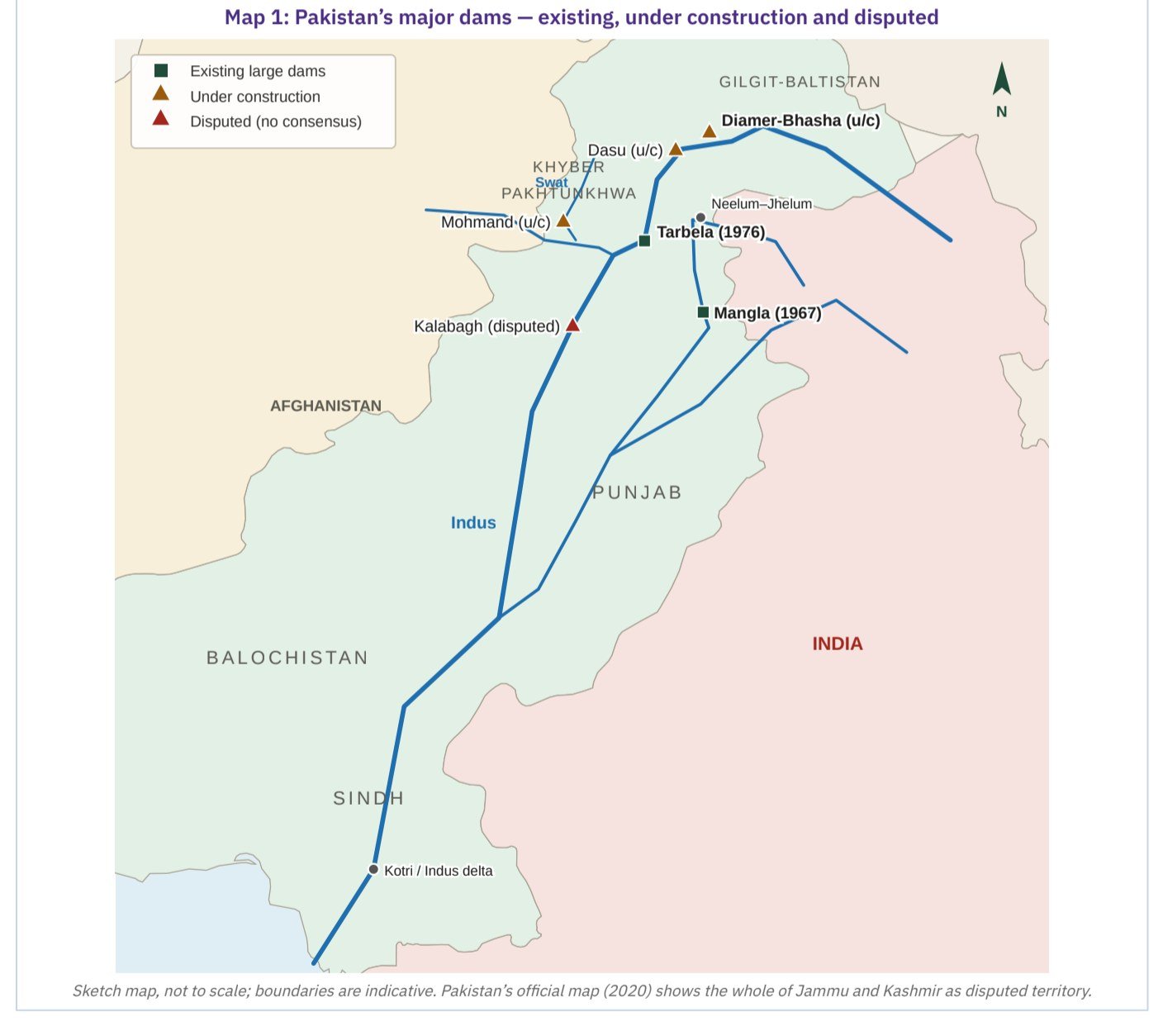
Dams store water for irrigation and drinking, generate cheap and clean electricity and control floods. Pakistan built two great dams, Mangla (1967) and Tarbela (1976), under the Indus Basin Project, but for almost fifty years after Tarbela it did not complete another large storage dam. Meanwhile its population tripled, reservoirs lost capacity to silt, and floods wasted huge volumes of water.
The question asks for a critical analysis of the causes and suggestions, so this answer covers both in roughly equal measure. It argues that the delay has been caused less by technical problems than by a lack of political consensus, finance and continuity, and that the remedy lies in consensus-building, sustainable financing and a national water strategy.
2. Why Dams Matter for Pakistan
Pakistan is one of the most water-stressed countries in the world, with per capita water availability falling towards scarcity levels. Agriculture, which employs over a third of the workforce, depends on irrigation; hydropower is the cheapest source of electricity; and floods, as in 2022 and 2025, cause enormous losses while much of the floodwater flows unused into the sea.
3. Causes of Delay
Political causes
Lack of inter-provincial consensus
The Kalabagh Dam is the clearest example: technically ready for decades, it has been opposed by Sindh, which fears less water downstream, and by Khyber Pakhtunkhwa, which fears flooding of Nowshera and displacement. The provincial assemblies of Sindh, KP and Balochistan passed resolutions against it, and it became a symbol of mistrust between provinces.
Political instability and short-termism
Frequent changes of government and short electoral cycles discouraged projects that take ten years or more to complete; each new government announced its own priorities, and dams were inaugurated more often than built.
Sindh’s downstream concerns
Sindh’s fear of reduced flows below Kotri and sea-water intrusion into the Indus delta has made any new upstream storage politically sensitive.
Financial causes
Huge costs and fiscal crisis
Large dams cost billions of dollars, Diamer-Bhasha alone was estimated at about $14 billion, at a time when Pakistan faced chronic deficits and IMF programmes.
International financing difficulties
The World Bank and ADB were reluctant to finance Diamer-Bhasha because it lies in Gilgit-Baltistan, which India disputes; China’s conditions led Pakistan to drop it from CPEC in 2017.
Policy and governance causes
Preference for thermal power
The power policies of 1994 and 2002 favoured quick-to-build oil-and gas-fired plants by private producers, which created expensive capacity payments and diverted attention from hydropower.
Weak planning and implementation
Feasibility studies, land acquisition, resettlement and contracts have repeatedly been delayed; there was no consistent long-term plan for water storage.
Technical, social and security causes
Geological and environmental challenges
Sites in the northern mountains face seismic risk, difficult access and heavy silt; environmental concerns over the delta and displacement must be addressed.
Resettlement and local disputes
Land acquisition and compensation disputes, such as those over the Diamer-Bhasha site between Gilgit-Baltistan and KP, have slowed work.
Security threats
Attacks on workers, including the Dasu attacks on Chinese engineers, have raised costs and caused delays.
4. The Cost of Delay, the “Collateral Loss”
The delay has cost Pakistan dearly: storage of only about 30 days of flows against several months in many countries; reservoirs losing capacity to sedimentation; dependence on expensive imported fuel for electricity and circular debt; water shortages for agriculture during sowing seasons; and greater flood damage. It also leaves Pakistan more vulnerable to Indian manipulation of flows.
5. Current Progress
6. Suggestions to Reverse the Loss
Build consensus through the CCI
Resolve disputed projects through the Council of Common Interests, with independent technical studies, guaranteed downstream flows for Sindh under the 1991 Accord and transparent telemetry of water use. Prioritise dams that all provinces accept, and keep Kalabagh for when trust exists.
A protected, long-term water plan
Implement the National Water Policy as a national commitment that no government can abandon, with dams ring-fenced in the federal budget.
Innovative financing
Use public-private partnerships, green and diaspora bonds, multilateral climate funds and water and power charges, reducing reliance on a single lender.
- Political: no consensus, instability
- Financial: cost, donors, disputed site
- Policy: thermal bias, weak planning
- Technical and security: geology, resettlement, attacks
Small and medium dams
Build small and medium dams and recharge structures in every province, which are quicker, cheaper and less controversial, and help capture floodwater.
Fair resettlement and local benefit
Give displaced communities fair compensation, jobs and a share of royalties, so that local people support projects.
Demand-side reforms
Reduce water losses by lining canals, using drip and sprinkler irrigation and pricing water to reflect its value, the cheapest way to “create” new water.
Security and timely execution
Provide strong security for project sites and workers, and hold WAPDA and contractors accountable for deadlines.
7. Conclusion
Pakistan has delayed building dams mainly because of political disputes among provinces, short-term politics, financial constraints, a policy bias towards thermal power, weak planning and security problems, not because of a lack of sites or engineering skill. The cost has been water scarcity, expensive electricity and greater flood losses, at a time when climate change and India’s stance on the Indus Waters Treaty make storage more urgent than ever. With consensus through federal institutions, protected long-term planning, innovative finance, small dams and efficient water use, Pakistan can turn this collateral loss into water security.
Related answers on this topic
More preparation: See all CSS Pakistan Affairs past papers by topic.
Last updated: 2 November 2026.
Preparing for CSS 2027? Subscribe to Prep With NAJO WAVE for more Pakistan Affairs answers.